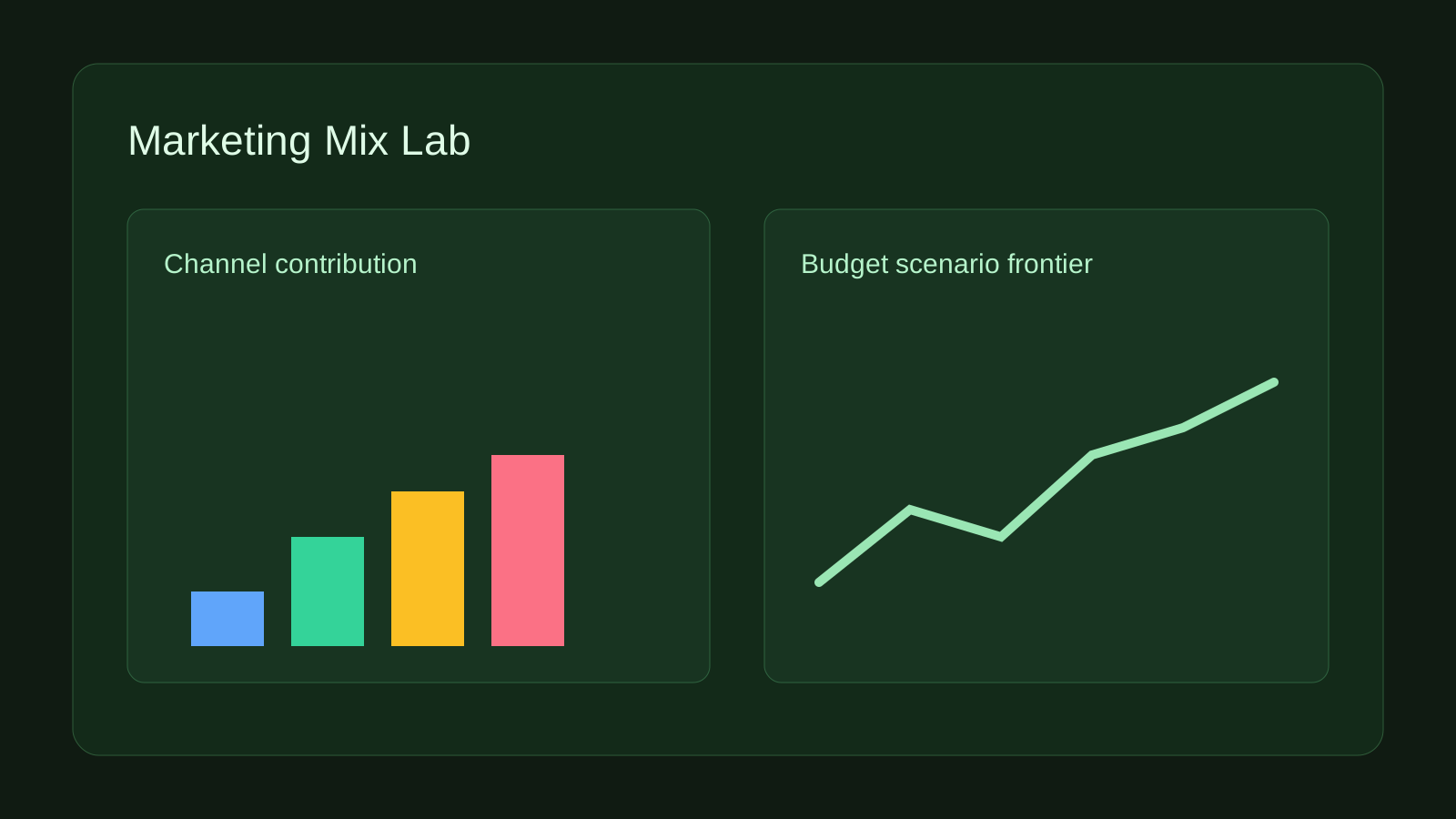
Overview (Problem + Context)
- The student startup was increasing spend, but leadership lacked clarity on marginal channel performance.
- Weekly reporting emphasized vanity metrics and did not support reallocation decisions.
- The team needed a transparent framework to compare channel efficiency under multiple budget scenarios.
My Role + Responsibilities
- Owned KPI definition and taxonomy for acquisition, activation, and cost performance.
- Implemented consistent tracking conventions across paid and owned channels.
- Facilitated review sessions to translate dashboard outputs into action.
Approach
- Unified campaign and conversion data into a shared reporting model.
- Built scenario assumptions for spend elasticity, conversion lag, and channel saturation.
- Evaluated budget shifts against CAC and payback constraints.
- Defined an operating cadence for weekly experimentation decisions.
Implementation Details (Stack + Architecture Choices)
- Used SQL transformations to normalize source data from analytics and ad platforms.
- Prototyped scenario engine in Python and exposed controls in Streamlit.
- Delivered executive-facing views in Tableau for recurring growth meetings.
- Structured dashboard sections by decision type: scale, hold, or reduce.
Results (Metrics + Outcomes)
- Achieved a 24% reduction in blended CAC over a six-week period.
- Reallocated budget toward high-intent channels with lower payback period.
- Improved confidence in planning by replacing ad-hoc spreadsheets with standardized reporting.
What I’d Do Next (Reflection)
- Add MMM-style baseline decomposition to separate seasonality from campaign impact.
- Integrate retention and LTV estimates to support full-funnel budgeting.
- Automate anomaly alerts to detect underperforming campaigns earlier.
Links
- [GitHub repository](https://github.com/your-github/marketing-mix-lab)
- [Dashboard walkthrough](https://example.com/marketing-mix-dashboard)
- [Experiment report](https://example.com/marketing-mix-report)