Overview (Problem + Context)
- The product team had high monthly cancellations but no shared definition of churn risk.
- Marketing campaigns were generic and delayed because segmentation happened manually.
- Stakeholders needed a repeatable way to identify at-risk users and trigger timely interventions.
My Role + Responsibilities
- Led the analytics framing from problem definition to campaign measurement.
- Aligned product and marketing stakeholders on success metrics and risk thresholds.
- Delivered model output in a business-readable format for weekly campaign operations.
Approach
- Standardized user lifecycle states and created a 90-day churn prediction target.
- Engineered behavioral, transactional, and support-interaction features.
- Benchmarked logistic regression and gradient boosting models using precision/recall tradeoffs.
- Prioritized interpretable features to support non-technical adoption.
Implementation Details (Stack + Architecture Choices)
- Built data preparation in SQL and dbt to ensure stable feature generation.
- Trained and validated model candidates in Python with reproducible notebooks.
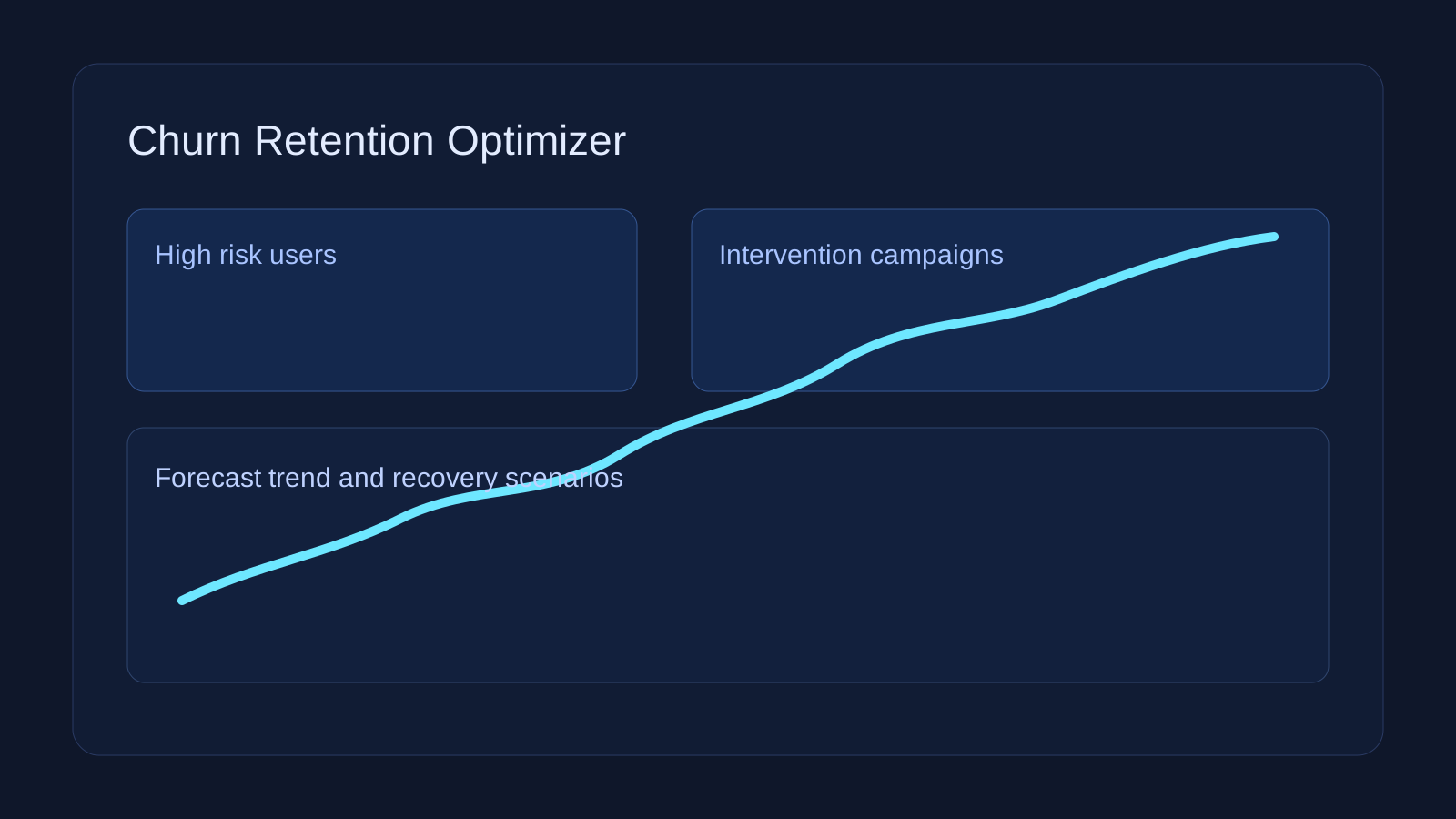
- Published risk segments and confidence scores to Looker Studio dashboards.
- Designed a weekly refresh pattern to keep interventions aligned with recent behavior.
Results (Metrics + Outcomes)
- Identified a high-risk cohort representing 22% of upcoming cancellation volume.
- Simulated retention lift scenarios and showed strongest ROI in targeted win-back flows.
- Pilot campaign design indicated an expected 18% reduction in churn for targeted users.
What I’d Do Next (Reflection)
- Add uplift modeling to optimize treatment selection instead of risk-only ranking.
- Introduce feature drift monitoring and model retraining thresholds.
- Connect model outputs directly into CRM automation for real-time triggering.
Links
- [GitHub repository](https://github.com/your-github/churn-retention-optimizer)
- [Interactive dashboard](https://example.com/churn-retention-demo)
- [Project report](https://example.com/churn-retention-report)